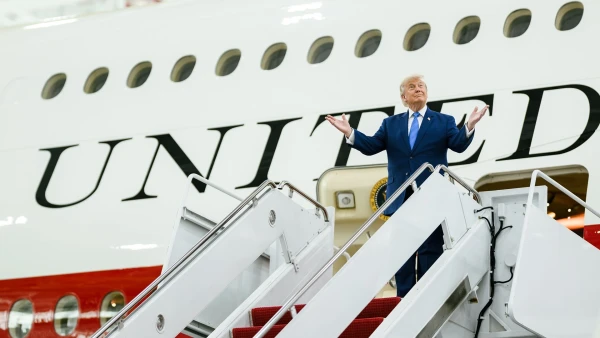
The Boeing 747-8 gifted by Qatar, currently operating as the VC-25B Bridge aircraft, has shattered two major Air Force records during its return flight from Shenzhen, China. According to the White House, the jumbo jet completed the heaviest takeoff in Air Force history at just under one million pounds and achieved the longest nonstop Air Force One flight to date, lasting nearly 15 hours.
Carrying President Donald Trump home from the APEC summit, the aircraft departed Shenzhen at 5:54 PM local time and landed at Joint Base Andrews at 8:01 PM local time without a single refueling stop. The flight cruised at an altitude of 33,000 feet, averaging 500 knots (926 km/h) while passing over major waypoints including Shanghai, Tokyo, Shemya, Winnipeg, and Cleveland. Trump noted that the direct route trimmed considerable time off the journey, which traditionally requires a refueling stop.
Analyzing the Milestones
The base commercial model, the 747-8i, boasts a maximum takeoff weight of 987,000 pounds (447,694 kg)—surpassing even a fully loaded C-5M Galaxy—with an expected endurance of 15 to 16 hours. The roughly 7,500 nautical miles (13,890 km) covered during the presidential flight comfortably falls within the commercial variant's advertised range of nearly 7,800 nautical miles.
While the Bridge aircraft operates near the upper limits of its design envelope, industry observers note that its weight parameters differ from a commercial airliner carrying a full passenger payload, and the presence of any auxiliary fuel tanks added during conversion remains a factor in its exact operational range.
A press pool briefing distributed during the flight confirmed the milestones:
"The VC-25B conducted the heaviest takeoff in Air Force history, at just under one million pounds, and completed the longest nonstop Air Force One sortie to date, at nearly 15 hours."
Limitations for Future Fleet Operations
Unlike older presidential aircraft, the Bridge jet lacks in-flight refueling capabilities—a requirement that was controversially dropped in 2017 as a cost-saving measure for both the interim aircraft and the upcoming purpose-built VC-25Bs currently under contract with Boeing. Consequently, future operations of this nature will rely strictly on the airframe's impressive unrefueled endurance.