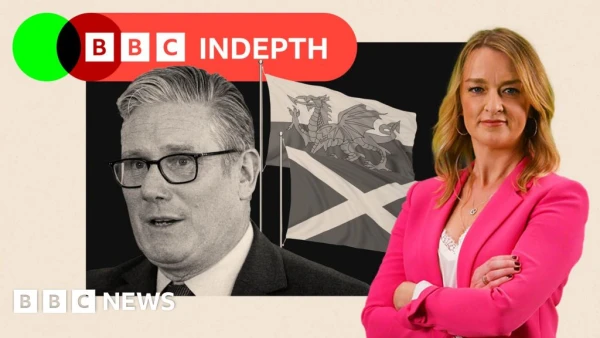
A minister jokes grimly, "We're living the dream." Labour may need dark humor in the coming weeks as elections loom—local tests in England, national ballots in Wales and Scotland—votes another cabinet minister fears "will be a disaster."
Traveling through Wales and Scotland, I've spoken with politicians vying for power and, more importantly, the voters who will decide on 7 May. Just when Labour should be campaigning fiercely, fresh embarrassment erupts almost daily over the prime minister's appointment of Lord Mandelson as ambassador to Washington. Ructions in Whitehall, rancour in Labour, and a sense of government disarray. How deeply do Starmer's woes affect the devolved elections?
"It's just so huge," says a senior Labour MP canvassing recently. Yet these elections are not solely about Westminster turmoil. Voters will choose who makes crucial devolved decisions affecting schools, healthcare, and income tax rates.
Both Labour in Cardiff (in power since 1999) and the SNP in Edinburgh (since 2007) face disillusionment. Voters in both nations express frustration with public services and a sense that devolution hasn't fully delivered. Now, the two countries seem poised to make very different choices.
Wales: Labour's Grip Weakens
Labour's dominance in Wales appears to be ending. Canvassers report praise for Starmer avoiding war with the US in Iran, but the mood is bleak. "It's been a long time coming—the failures of the Welsh government keep coming up on the doors," says a party source.
In Swansea, Welsh First Minister Eluned Morgan pledges to "fight and fight," but admits she might lose her seat—a rare admission from a party leader. A Labour loss would be historic: the party has won in Wales for a century. Plaid Cymru leader Rhun ap Iorwerth and Reform's Dan Thomas both believe they can win, which would mark the first non-Labour first minister.
Wales's new proportional voting system makes a majority unlikely, so post-election haggling is expected. Plaid's ap Iorwerth says he'd run a minority government, counting on Lib Dems, Greens, and Labour to block Reform. Tory leader Darren Millar is open to working with Reform, while Reform's Thomas insists he's aiming for outright majority. There's even a possibility that one party wins the most seats while another wins the most votes, creating potential disputes over fairness.
Old certainties are gone; parties once tiny now stand to gain significantly.
Scotland: SNP's Confidence, but Reform on the Rise
In Scotland, the SNP stunned Labour in 2007 and has won every Holyrood election since. Despite scandals and mixed public service records, voters seem willing to extend their 20-year run.
First Minister John Swinney has restored calm after chaos under Alex Salmond and Nicola Sturgeon. He confidently predicts an SNP majority, though the electoral system makes that hard. One Labour minister is "gobsmacked by their lack of expectation management."
Reform is surging in Scotland, especially in Glasgow on immigration issues, despite rival parties dismissing their campaign as a "binfire" after candidates lost over offensive remarks. The Greens have gained members but lack momentum here after a tough coalition with the SNP. Lib Dems and Tories, once major players, now focus on the second ballot (the "peach vote") to maximize seats. Their campaigns are on-brand: Lib Dems making frangipane tarts in Edinburgh New Town, Tories knocking doors with a labrador in a Glasgow suburb.
The independence question lingers, with the SNP and Greens hoping to claim a mandate for another referendum if they win a majority.
Conclusion
Voters in both nations are weighing local issues alongside the chaos in Westminster. Labour's struggles may not determine every outcome, but they certainly colour the mood. As one minister put it, the next weeks are a mix of relish and dread.