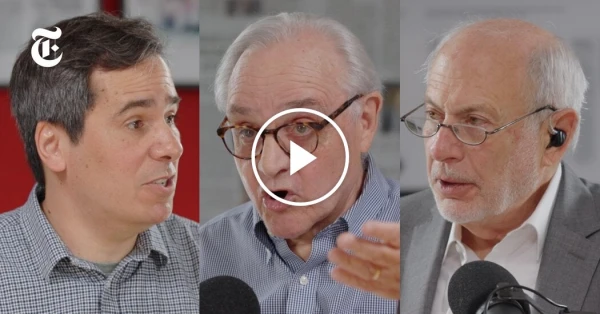
In a recent New York Times Opinion roundtable, Robert Siegel, E.J. Dionne, and Carlos Lozada dissected President Trump's handling of the Iran conflict, revealing the limits of his self-styled deal-making prowess. As a deadline Trump set for Iran came and went without military escalation, the president instead extended a ceasefire, yet Iran dismissed the move as meaningless. Seizures of container ships near the Strait of Hormuz underscored the ongoing tensions.
Dionne argued that Trump's ability to spin crises has met its match in the economic realities of tariffs and war-induced price hikes. The president's promise to lower prices on day one has backfired, and voters are noticing. "When you are as ill-prepared for this war as Trump clearly was," Dionne said, "you are not prepared for what we face." He contrasted Trump's approach with Obama's detailed negotiations with Iran, which involved experts like physicist Ernest Moniz, calling the current administration a "cliff notes presidency."
Lozada highlighted Trump's myth of the "master dealmaker," noting that promises to end the Ukraine war in a day and bring down prices immediately have fallen flat. "I don't think Trump has the attention to detail, the patience, frankly, for arduous negotiations that lead to a real deal," Lozada said. He pointed out Trump's habit of declaring the war "ahead of schedule"—a tactic borrowed from his real estate days to project control. But wars don't follow schedules, and threats have become meaningless timeframes.
The discussion also touched on the dismantling of USAID, which Dionne called a "hand grenade at American respect and influence." The panel concluded that Trump is less a dealmaker than a crisis manager focused on manipulating the news cycle and holding his coalition together.