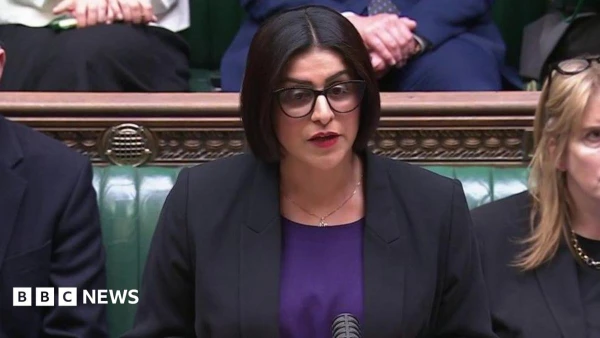
Home Secretary Shabana Mahmood has declared Iran's Islamic Revolutionary Guard Corps (IRGC) a threat to national security, using new government powers to ban any form of support for the group. Offences, ranging from expressing a positive opinion to providing assistance, now carry a maximum penalty of 14 years in prison.
In a written statement to Parliament, Mahmood also proscribed two other organizations: the Islamic Movement of Companions of the Right (IMCR) and the volunteer corps of Russia's GRU foreign military intelligence agency. These designations grant police and intelligence agencies enhanced powers to combat espionage, foreign interference, sabotage, and physical attacks.
The IRGC is believed to have orchestrated seven attacks on UK targets linked to Jewish and Israeli communities. Prime Minister Sir Keir Starmer, who had pledged to fast-track the National Security (State Threats) Act in April, stated: "We will never let Britain be a playground for states who want to spread fear, division and violence on our streets." He added that the new powers will make it easier to prosecute those carrying out "dirty work" in Britain.
If Parliament approves the regulations later this week, acts of sabotage—including arson—on behalf of these groups could result in life imprisonment. Prosecutors will no longer need to prove a foreign power connection in every case, streamlining legal proceedings.
Mahmood emphasized: "Iran and Russia are using proxies and thugs to do their dirty work on our shores. I have rapidly designated three groups so those working for them will be tracked down and put behind bars."
MI5 has identified at least 20 potentially lethal Iranian-backed plots targeting individuals in the UK over the past year. The IRGC, established after the 1979 revolution to defend Iran's Islamic system, has evolved into a powerful state arm with an estimated 190,000 active personnel. Western nations have long accused it of sponsoring terrorism abroad; Australia, Canada, and the US have already listed it as a terror group, and the European Union followed suit in January 2024.
The UK, which previously lagged behind, now argues that new powers are necessary amid a rise in state-backed aggression, including increased threats to life and the use of proxy groups.