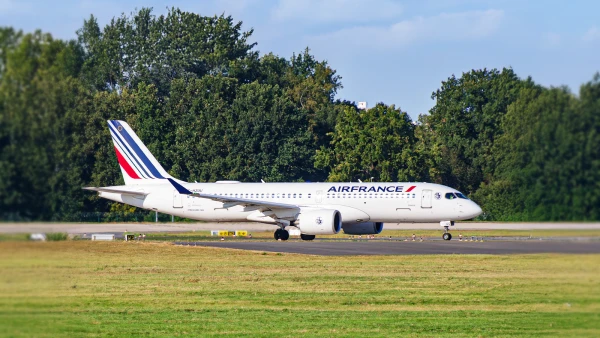
The Airbus A220, once a troubled project under Bombardier’s CSeries banner, has surged to become a cornerstone of modern regional aviation—with its largest operators now outpacing the jet’s original launch customer. By 2026, the narrowbody’s global fleet has ballooned to unprecedented heights, reshaping airline strategies and exposing critical vulnerabilities in the supply chain.
Delta Air Lines leads the pack with 92 A220-300s, followed by JetBlue Airways at 66, Air France at 60, Breeze Airways at 57, and airBaltic at 55. Notably absent from this elite group is SWISS International Air Lines, which placed the first order for the aircraft but now operates just 30 jets—a stark contrast to its peers’ aggressive expansion.
The A220’s journey from near-collapse to industry darling is a tale of resilience and unforeseen challenges. Originally developed as the CSeries, the program nearly collapsed under Bombardier’s financial strain before Airbus acquired a controlling stake in 2018. The acquisition breathed new life into the project, but the transition was far from smooth. Persistent engine issues with Pratt & Whitney’s PW1500G geared turbofans have plagued operators, grounding aircraft and forcing costly wet-lease replacements.
For airBaltic, the engine crisis proved catastrophic. The Latvian flag carrier, which had built a pure single-type fleet around the A220-300, saw up to 13 of its 55 jets grounded at the peak of the crisis in early 2025. The grounding wiped out thousands of flights, disrupted operations, and left the airline financially vulnerable. On September 14, airBaltic filed for Chapter 11 bankruptcy protection in New York, with Pratt & Whitney named as its largest creditor. The airline’s restructuring plan now slashes its active fleet from 54 to 36 jets by year-end, while 40 undelivered orders hang in limbo.
Despite these setbacks, the A220’s operational strengths remain undeniable. Its 145-seat cabin simplifies crew training, reduces maintenance complexity, and supports routes stretching up to 3,450 nautical miles. Air France, which took delivery of its 60th A220-300 in November, has leveraged the jet’s efficiency to retire older Airbus A318s and A319s, with plans to expand its fleet to 90 or 95 aircraft. The airline’s five-abreast cabin design ensures 80% of passengers enjoy window or aisle seating, while free high-speed WiFi now covers 85% of its fleet.
JetBlue’s transition from Embraer E190s to A220-300s has delivered dramatic cost savings, with operating costs per seat dropping by 29% and fuel burn per seat by 40%. The airline’s passengers now benefit from wider seats, extra-legroom rows, and upgraded in-flight entertainment.
The A220’s success story is not without its ironies. SWISS, the jet’s launch customer, is now phasing out its pioneering A220-100 fleet as engine shortages favor the larger A220-300. The irony underscores a broader lesson: even the most promising aircraft programs can face existential threats from supply chain fragility and external shocks.
As airlines navigate the aftermath of the engine crisis and the financial fallout from airBaltic’s bankruptcy, the A220’s future remains bright—but its path is far from assured.