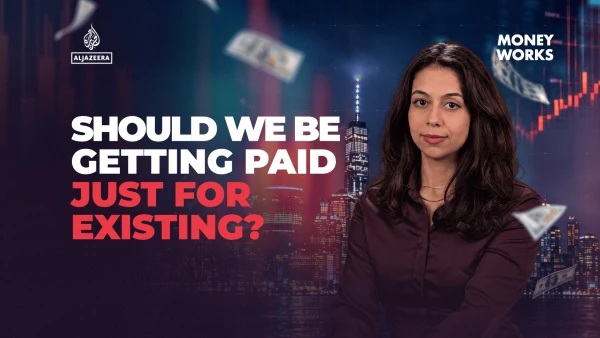
As artificial intelligence reshapes industries from manufacturing to white-collar professions, economists and policymakers are grappling with a pressing question: Could universal basic income (UBI) become the financial safety net of the future? The rapid advancement of AI-driven automation threatens to displace millions of workers, leaving governments scrambling to rethink social welfare systems that may no longer be sustainable in their current forms.
The debate has intensified as tech giants and startups race to deploy AI tools that can perform tasks ranging from customer service to legal research with minimal human oversight. A recent report from the McKinsey Global Institute estimates that by 2030, up to 30% of global work hours could be automated, potentially displacing 800 million jobs worldwide. While proponents of UBI argue it could cushion the blow of mass unemployment, critics warn it risks creating a permanent underclass dependent on government handouts.
"The challenge isn’t just about replacing jobs—it’s about redefining work itself," said Dr. Elena Vasquez, an economist at the Massachusetts Institute of Technology. "If AI takes over routine tasks, we need to ensure people have the skills and resources to transition into new roles. UBI could buy time, but it’s not a long-term solution without structural reforms to education and labor markets."
Countries like Finland and Canada have experimented with UBI pilots, with mixed results. Finland’s two-year trial, which provided 2,000 unemployed citizens with €560 monthly payments, found no significant impact on employment but improved recipients’ well-being. Meanwhile, Canada’s Ontario province scrapped its UBI program in 2018 after political backlash, leaving many participants in financial limbo.
Opponents of UBI argue that it could disincentivize work and strain public finances, particularly as aging populations increase pressure on social security systems. "A blanket UBI ignores the nuances of economic inequality," said Robert Chen, a policy analyst at the Cato Institute. "It’s a blunt instrument that doesn’t address the root causes of poverty or the need for targeted welfare programs."
The conversation has also extended to the private sector, with companies like Microsoft and Google exploring "UBI-like" benefits for displaced workers. However, these initiatives are often limited in scope and duration, raising concerns about corporate responsibility versus government intervention.
As the AI revolution accelerates, the urgency to address its societal impacts grows. Whether UBI becomes a cornerstone of the 21st-century welfare state—or a cautionary tale of misguided policy—remains an open question. One thing is clear: the status quo is no longer viable in an economy where machines are increasingly doing the work of humans.