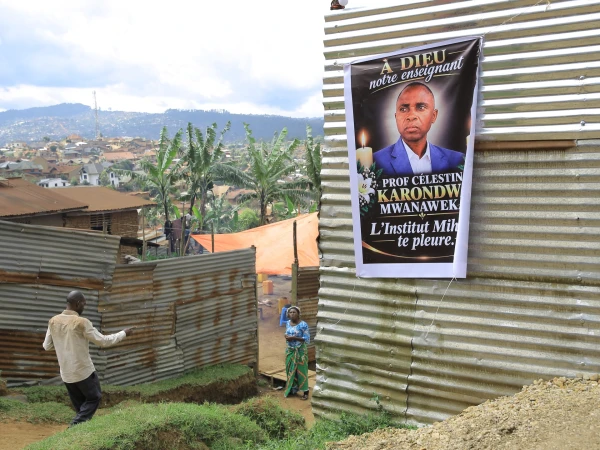
Mourners gathered in the eastern Democratic Republic of the Congo (DRC) on Wednesday to lay to rest a local politician who was brutally murdered in a tragic backlash against public health efforts. Marie-Celestin Karondwa was fatally beaten in his Butembo home after using a local radio broadcast to support the government's fight against a surging Ebola outbreak.
The fatal attack unfolded on Sunday in North Kivu province, a major epicenter of the deadly virus. According to the Union for Democracy and Social Progress (UDSP)—the ruling party in the DRC government—Karondwa was targeted strictly because he publicly acknowledged the severe threat that Ebola poses to the community. Following the assault, he succumbed to his extensive injuries at a nearby hospital.
“They beat him up and then set the house on fire,” his granddaughter, Sagesse Kavira, revealed during the funeral proceedings. Authorities have not yet identified the perpetrators or confirmed the exact size of the mob involved in the assault.
Karondwa’s death is part of a disturbing trend of violence aimed at health workers and public officials as the Central African nation combats its 17th and most lethal Ebola crisis to date. The epidemic has already seen more than 8,000 infections and nearly 4,000 deaths.
The World Health Organization (WHO) reports that the current surge is driven by the Bundibugyo strain. While researchers are actively testing potential treatments, there is currently no approved vaccine or specific cure for this particular variant. The virus has spread across multiple provinces, with the Ituri region bearing the brunt of the crisis.
Efforts to implement localized, village-level health interventions are being severely hindered by widespread public resistance. Plagued by a deep-seated distrust of the government, many residents view the Ebola outbreak as a fabricated political hoax designed to embezzle public funds. This skepticism, coupled with the heavy stigma associated with the disease, prevents many infected individuals from reporting their symptoms or seeking medical help.
Health responders warn that this climate of disbelief makes it incredibly difficult to navigate remote areas and emerging hotspots, which are already struggling with severe shortages of medical supplies and personnel.
The challenge is magnified in the rebel-controlled territories of the eastern DRC. Decades of relentless conflict and human rights violations have left local populations deeply suspicious of both state authorities and outside medical teams. Highlighting the dire situation, WHO Director-General Tedros Adhanom Ghebreyesus recently warned that the region is enduring a "catastrophic collision of disease and conflict" that is drastically undermining efforts to save lives.