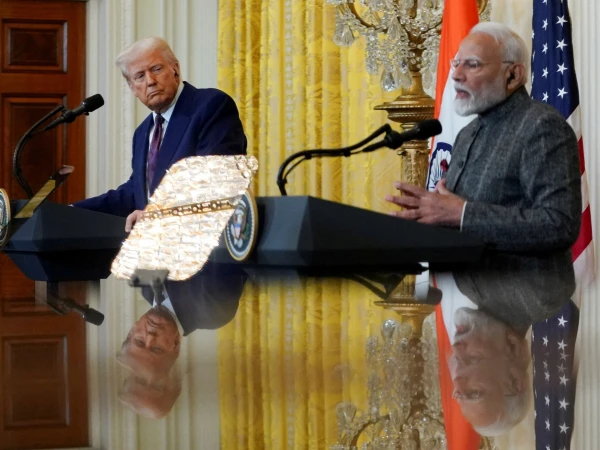
In a sharp departure from its customary quiet diplomacy, New Delhi is taking its grievances with Washington public. During a recent event in New York following the United Nations General Assembly, India’s External Affairs Minister S. Jaishankar delivered an unusually candid critique of the United States, calling out the Trump administration for its "self-centred" trade policies and a perceived indifference to India’s struggles with regional terrorism.
Historically, India has preferred to resolve disputes with allied nations behind closed doors. However, increasing unpredictability from the White House—combined with mounting domestic pressures—has prompted a strategic pivot. Analysts note that Prime Minister Narendra Modi is facing intense scrutiny at home, with opposition leaders accusing his government of yielding too easily to American demands.
This shifting dynamic was palpable following a recent phone call between Modi and Trump, which the Indian leader tersely described as "productive"—a stark contrast to the warm "good friend" rhetoric heavily utilized in previous years.
Chietigj Bajpaee, a senior research fellow at Chatham House, observed that Jaishankar’s frank assessment reveals a new reality. "Clearly, the shine has come off the bilateral relationship after India was initially among the most optimistic about a second Trump term," Bajpaee stated.
Trade Tensions Reach a Boiling Point
Economic policy remains a massive wedge between the two nations. While the US is India’s biggest trading partner—with bilateral goods trade projected near $150 billion—Washington has grown frustrated by a nearly $60 billion trade deficit.
Speaking on the economic fallout of global conflicts, Jaishankar criticized unilateral economic maneuvers, urging nations not to be so absorbed in their own agendas that they inadvertently damage the Global South. The friction has been exacerbated by aggressive US trade tactics, including threats of new global tariffs and legislation allowing for up to 100 percent tariffs on nations purchasing Russian oil.
Former Indian diplomat Ajay Bisaria noted that these punitive measures, set to take effect soon, could act as a "deal breaker" for the alliance. Bisaria explained that rising public sentiment in India views the US tactics as bullying, forcing the Modi government to vocalize its frustrations rather than suffer in silence.
The Pakistan Pivot and Geopolitical Friction
Beyond economics, geopolitical allegiances are fraying. India was deeply unsettled last year when a brief, intense border conflict with Pakistan over a deadly Kashmir attack ended with Trump loudly claiming credit for brokering a ceasefire. For New Delhi, any third-party intervention in the Kashmir dispute crosses a strict diplomatic red line.
While India fumed over the interference, Islamabad leaned hard into the US relationship, heaping praise on Trump and even floating his name for a Nobel Peace Prize. As US-Pakistan relations bloom, India's patience is wearing thin.
Jaishankar emphasized that the US currently lacks the "empathy" and understanding necessary to grasp the decades of cross-border terrorism India has endured. According to Harsh Pant of the Observer Research Foundation, the Trump administration's heavy focus on Pakistan fundamentally altered India's calculations. "When, at the top level, you don’t see reciprocity, then calculations change, and decisions are taken to bring differences out in the open," Pant said.
The Visa Squeeze
Compounding these geopolitical headaches is an ongoing crackdown on the H-1B visa program. Long a vital pipeline for highly skilled Indian professionals, the program has faced mounting hurdles and increased fees driven by Trump's political base. As the economic benefits of global mobility directly clash with domestic US politics, the Indian government is finding fewer and fewer reasons to keep its frustrations under wraps.