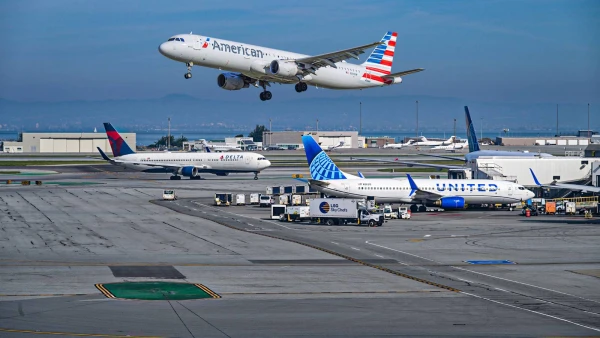
In 2026, the battle for airline reliability among America’s three largest legacy carriers—Delta Air Lines, United Airlines, and American Airlines—revealed stark differences in punctuality, cancellations, and operational consistency. While Delta maintained its reputation for on-time arrivals, United emerged as the most dependable for keeping its published schedule intact. American, meanwhile, lagged behind in nearly every key metric, leaving passengers with tough choices when booking flights.
“A flight that arrives on time is only useful if it operates in the first place.” — Industry analyst on Delta Air Lines’ 2026 reliability challenges
Delta’s Punctuality Edge Comes With a Catch
Delta Air Lines continued to outperform its rivals in on-time arrivals, with 79.33% of flights arriving punctually in the first half of 2026—second only to Alaska Airlines. The carrier’s consistency was further highlighted in August, when it topped the Department of Transportation’s monthly rankings with a 77% on-time rate. By September, Delta’s punctuality soared to 82.52%, placing it second in North America.
However, Delta’s reliability story is more complicated than its punctuality numbers suggest. While the airline excelled at getting operated flights to their destinations on time, its cancellation rate of 2.35% in early 2026 raised concerns. In July alone, Delta canceled over 4,600 flights—nearly 3% of its scheduled operations—disrupting thousands of passengers. This marked a sharp decline from its historical performance, where it had been recognized as North America’s most on-time airline for five consecutive years.
The contrast between Delta’s punctuality and cancellation rates underscores a critical truth: arriving on time means little if the flight never takes off. Passengers prioritizing reliability must weigh both metrics carefully when choosing Delta.
United’s Operational Discipline Shines
United Airlines, often criticized for its punctuality, emerged as the most reliable of the three legacy carriers in 2026 when it came to operating its published schedule. The airline canceled just 1.76% of its flights in the first half of the year, outperforming Delta (2.35%) and American (3.32%). Even its mainline operations fared exceptionally well, with a cancellation rate of just 1.13%—the best among the three carriers tracked by the DOT.
United’s strength in cancellations was particularly evident in August, when it canceled just 0.89% of flights, narrowly beating Delta’s 0.92%. While Delta’s punctuality remained slightly ahead, United’s ability to minimize disruptions gave it a clear advantage for passengers prioritizing schedule reliability over arrival times.
That said, United’s baggage handling lagged behind Delta’s, with 0.69 mishandled bags per 100 passengers compared to Delta’s 0.37. This discrepancy highlights that reliability isn’t just about cancellations or punctuality—it’s a multifaceted challenge that touches every aspect of the passenger experience.
American Airlines’ Reliability Gap Widens
American Airlines entered 2026 with the most ground to make up among the three legacy carriers. The carrier canceled 3.32% of its scheduled flights in the first half of the year—nearly double United’s rate and the highest among the trio. Its punctuality also lagged, with just 74.38% of flights arriving on time in the same period, trailing Delta by nearly 5 percentage points.
There were glimmers of improvement later in the year. In September, American’s on-time performance jumped to 77.11%, while its cancellation rate dropped to 1.01%. Though a step in the right direction, the airline still had significant catching up to do. The disparity between American and its rivals underscores the operational challenges it faces in maintaining a reliable network.
Regional Partners Add Another Layer of Uncertainty
No discussion of airline reliability in 2026 would be complete without addressing the role of regional partners. These airlines, which operate smaller routes for the legacy carriers, often struggle with operational constraints that impact overall performance.
United Express canceled 2.51% of its flights in early 2026, while Delta Connection’s rate was 2.77%. American Eagle, American’s regional arm, fared the worst, canceling 3.68% of its scheduled services. These figures highlight how regional operations can drag down the reliability of the broader network, even when mainline performance is strong.
As airlines evaluate future fleet replacements and route expansions, the performance of regional partners will remain a critical factor in shaping passenger trust and satisfaction.