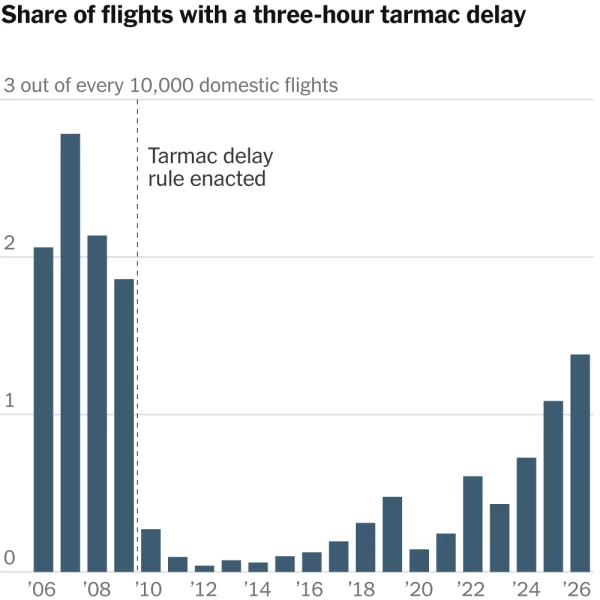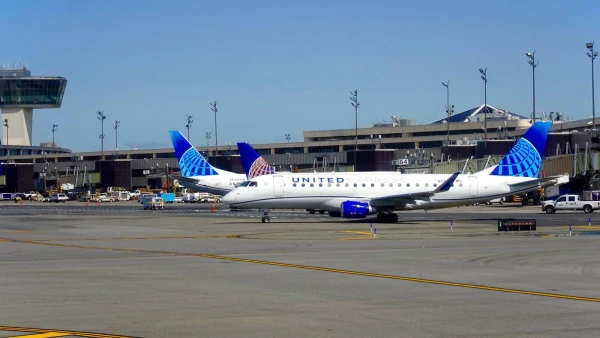
Travelers flying through New York City’s airports are facing a growing crisis on the tarmac, with federal data revealing that flights to and from the city account for a staggering quarter of all excessive delays nationwide. According to the US Department of Transportation’s latest Air Travel Consumer Report, released this November, delays lasting more than three hours at airports like John F. Kennedy International (JFK) and Newark Liberty International (EWR) are crippling schedules and frustrating passengers.
The report, which analyzed September data, flagged four of the 16 flights nationwide with excessive tarmac delays as originating from or destined for JFK or EWR. Among the worst offenders was JetBlue, which ranked last in on-time arrivals at just 72%, alongside a cancellation rate of 2.1%. Newark Airport (EWR) and JFK fared slightly better, with on-time arrival rates of 76.9% and 75%, respectively, while LaGuardia (LGA) lagged at 68.8%.
“The congestion in New York’s airspace is a ticking time bomb for travelers. When one flight is delayed, it doesn’t just affect that plane—it ripples through the entire system.” — Aviation industry analyst, speaking on condition of anonymity.
Why Are New York’s Airports Struggling?
The root causes of these delays are multifaceted. Air traffic control telecom outages, a shortage of air traffic controllers, and chronic airport congestion are primary culprits. Severe weather at major hubs like New York can trigger cascading delays, as airlines scramble to reroute flights and manage backlogs. Even minor disruptions—such as a single diverted flight—can snowball into hours-long delays for passengers.
Delta Airlines emerged as the most reliable among the major carriers, with fewer excessive tarmac delays reported. In contrast, ultra-low-cost carriers like Allegiant maintained low cancellation rates, though their overall punctuality remains a point of contention among travelers.
The Human Cost of Delays
For passengers, the impact extends beyond missed connections. Long tarmac delays can lead to canceled meetings, disrupted vacations, and even health risks, particularly for vulnerable travelers. The Transportation Department received over 100 consumer complaints related to apron delays in September alone, underscoring the frustration felt by travelers.
As the holiday travel season approaches, airlines and airport authorities are under pressure to address these systemic issues. Solutions may include expanding runway capacity, investing in air traffic control technology, and improving coordination between airports to mitigate the ripple effects of delays.
For now, travelers are left navigating a system where patience—and luck—are the most valuable tools.