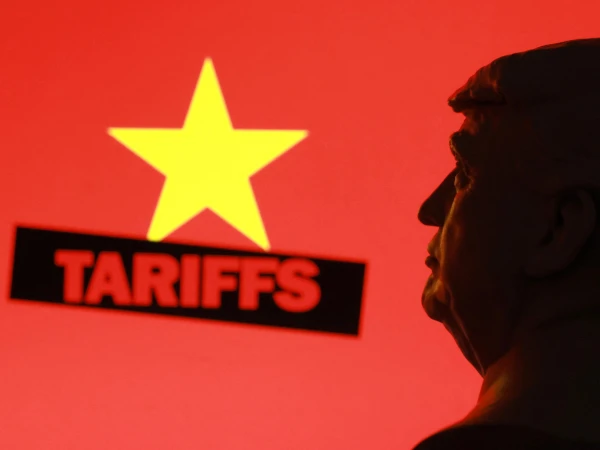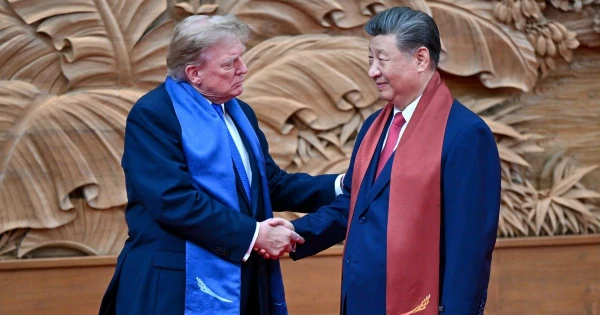
Just weeks before his anticipated meeting with China’s Xi Jinping in Miami, President Donald Trump has unleashed a sweeping new tariff regime targeting Beijing with unprecedented severity. The move, announced late Friday, slaps a 15% tariff on all Chinese imports, escalating from the existing 10% rate—a decision that has sent shockwaves through global markets and left diplomats scrambling to decipher the president’s endgame.
The White House framed the tariffs as a necessary step to protect American industries from what it calls "unfair trade practices" by Beijing, including intellectual property theft and state-subsidized competition. "China has taken advantage of the United States for decades," Trump declared in a statement. "This ends now."
"China has taken advantage of the United States for decades. This ends now." — Donald Trump, U.S. President
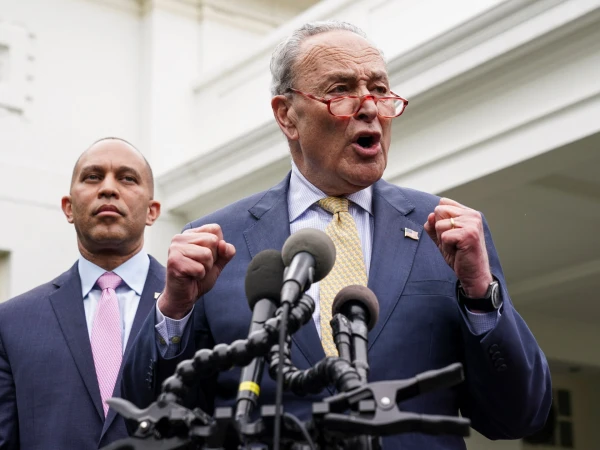
Critics, however, argue the move risks triggering a trade war that could destabilize global supply chains and drive up costs for American families. "This is economic brinkmanship at its worst," said Senator Elizabeth Warren. "Tariffs are taxes on American consumers, and this administration seems determined to double down on failed policies."
A History of Shifting Tactics
Trump’s tariff strategy has evolved dramatically since his first term. In 2018, he imposed sweeping tariffs on Chinese goods as part of his "America First" agenda, sparking a prolonged trade war that economists say shaved 0.5% off U.S. GDP growth. Yet by 2020, as the COVID-19 pandemic ravaged global trade, Trump and Xi appeared to bury the hatchet, signing a limited trade deal that temporarily eased tensions.
Now, with Trump’s return to the White House, the president seems to be adopting a more aggressive posture—one that combines tough rhetoric with sudden, sweeping policy shifts. The question on analysts’ minds is whether this is a calculated negotiation tactic ahead of the Miami summit or a sign of a more permanent shift in U.S.-China economic relations.
Global Markets React with Alarm
Financial markets reacted swiftly to the announcement, with the Dow Jones Industrial Average dropping 300 points in early trading Monday. Analysts at Goldman Sachs warned that the tariffs could shave 0.3% off U.S. GDP growth in 2025, while also stoking inflationary pressures.
"This is a high-risk strategy," said Mark Zandi, chief economist at Moody’s Analytics. "The administration is gambling that China will blink first, but Beijing has shown little willingness to back down in past confrontations."
For American businesses, the new tariffs add another layer of uncertainty to an already volatile trade environment. Companies like Apple, which relies heavily on Chinese manufacturing, could face steep cost increases, while farmers—already grappling with depressed commodity prices—may see their exports to China further constrained.
What’s Next?
The timing of the tariff announcement has raised eyebrows, coming just as Trump prepares to meet Xi in Miami. Some analysts suggest the move is designed to strengthen Trump’s negotiating position, while others warn it could derail the summit before it even begins.
"Trump’s playbook has always been unpredictable," said Bonnie Glaser, managing director of the Asia Program at the German Marshall Fund. "But this time, the stakes are higher than ever. A miscalculation could have lasting consequences for both economies."
As the world watches, one thing is clear: Trump’s tariff blitz has set the stage for a high-stakes showdown in Miami—and the outcome could reshape global trade for years to come.