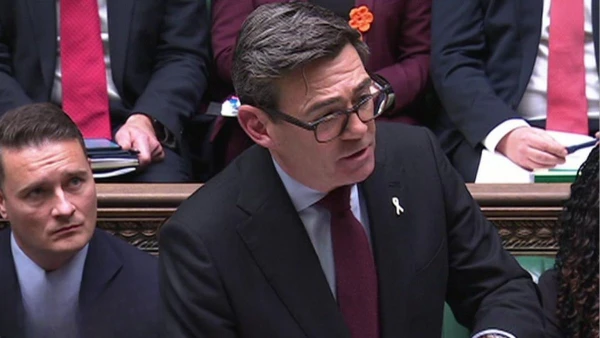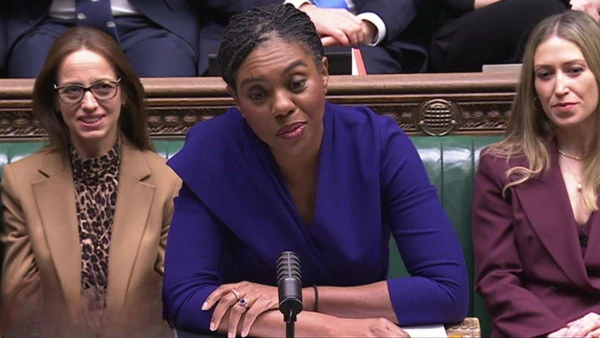
Conservative leader Kemi Badenoch has publicly questioned Prime Minister Andy Burnham’s stance on tuition fees for European students studying in the UK, reigniting tensions over the terms of the country’s post-Brexit relationship with the EU.
During a heated exchange at Prime Minister’s Questions, Badenoch demanded clarity on who would bear the financial burden if EU students were granted domestic tuition fee rates—currently capped at £9,790 annually for British undergraduates, compared to the £11,400 to £38,000 international students pay. "Will cash-strapped universities or taxpayers foot the bill?" she pressed.
Burnham, however, dismissed the suggestion outright. "The European negotiating position is not the British negotiating position," he stated, adding that the issue "has not been put on the table" and "won’t be." His refusal to entertain the idea of equal fees for EU students underscores the deep divisions persisting between London and Brussels, even as both sides tout progress on other fronts.
The dispute comes just days after the UK and EU finalized a landmark deal covering British food exports, emissions trading, and a new youth travel scheme. Yet the agreement’s future remains precarious, with EU sources hinting that the bloc may withhold its full implementation until tuition fees are resolved.
The UK government has insisted the broader deal will proceed regardless of the outcome, but universities warn that capping EU student fees at domestic rates could drain hundreds of millions from already strained budgets. "This is a critical moment for higher education," said one vice-chancellor, speaking on condition of anonymity. "We cannot afford to be caught in the crossfire of political brinkmanship."
At the heart of the impasse is a fundamental disagreement over reciprocity. While the EU seeks parity for its students in the UK, British students studying in Europe currently face no such guarantees. Burnham’s team argues that the bloc’s demands are non-negotiable, framing it as a matter of principle rather than economics.
"We will continue discussions with the European Union on the question of tuition fees," Burnham reiterated, though he offered no concessions. His government has introduced legislation to formalize the implementation of the broader deal, but the tuition fee negotiations remain in limbo—leaving students, universities, and taxpayers in a state of uncertainty.
For now, EU students in the UK will continue to pay international rates, while the political tug-of-war over their future fees drags on.