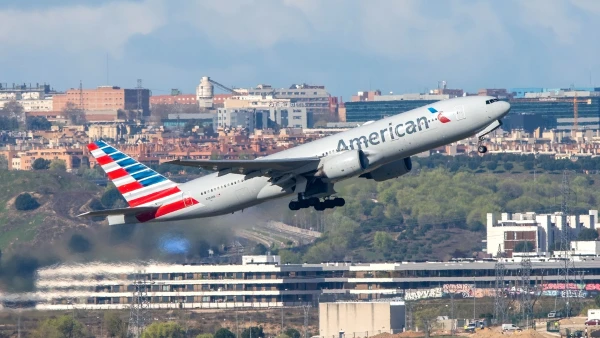
The Flight Safety Foundation (FSF) has long warned that unstable approaches—where an aircraft fails to meet critical landing parameters—are a leading cause of aviation accidents. Yet, despite decades of research and standardized procedures, a staggering 97% of Boeing 777 pilots continue their descent and land, even when conditions are far from ideal.
This persistent gap between policy and practice isn’t due to recklessness. Instead, it’s rooted in the unforgiving physics of flight, the psychological pressures of cockpit decision-making, and the industry’s long-standing reliance on recovery rather than avoidance. The result? A paradox where the very safeguards designed to prevent disaster are often ignored in the moments that matter most.
The Stable Approach: A Checklist for Survival
In 1998, the FSF introduced the concept of the stabilized approach—a set of rigid criteria pilots must meet before descending below 500 feet (152 meters) in visual conditions or 1,000 feet (305 meters) in instrument conditions. These rules are straightforward:
- The aircraft must be on the correct flight path.
- Airspeed must stay within 20 knots of the reference landing speed (VREF).
- The landing gear and flaps must be in the correct configuration.
- The sink rate should not exceed 1,000 feet per minute.
- Power settings must be appropriate and above the minimum required.
- All pre-landing checklists and briefings must be completed.
Violating these parameters—even slightly—classifies an approach as unstable. And historically, unstable approaches have been a factor in 66% of serious incidents and accidents during the final stages of flight, according to FSF data from 1984 to 1997.
Yet, despite the clear risks, the foundation’s 2017 report revealed a troubling trend: 95% to 97% of unstable approaches still result in landings. The industry’s response? Focus on reducing unstable approaches rather than embracing the go-around as a standard procedure.
The Boeing 777: A Race Against Time
For pilots flying the Boeing 777, the margin for error is razor-thin. Once the aircraft descends below 500 feet, the crew has just 35 to 42 seconds to decide whether to abort the landing and execute a go-around—assuming a typical approach speed of 132 knots (244 km/h).
Boeing’s own recommendations for 777 approach speeds range from 139 to 150 knots (257 to 278 km/h), depending on the variant, but the time constraint remains unchanged. In those fleeting moments, pilots must process multiple variables: wind shear, runway alignment, aircraft configuration, and the psychological weight of passenger expectations.
“The decision to go around isn’t just technical—it’s emotional. You’re trained to land safely, but you’re also acutely aware of the operational and reputational costs of aborting.”
— Anonymous Boeing 777 captain
The Human Factor: Why Pilots Push Through
The FSF’s 2017 study identified several psychological and operational barriers that discourage go-arounds:
- Normalization of Deviance: Over time, pilots and airlines have come to view unstable approaches as manageable rather than dangerous, especially with modern aircraft like the 777, which are engineered to recover from minor deviations.
- Cultural Stigma: Going around is often seen as a sign of failure, despite being a critical safety maneuver. Airlines may implicitly discourage the practice to avoid operational disruptions or passenger discomfort.
- Time Pressure: The brief window for decision-making leaves little room for hesitation, even when conditions are marginal.
- Lack of Awareness: Many pilots and airline managers underestimate the risks of unstable approaches, viewing them as routine rather than a precursor to disaster.
The FSF concluded that non-compliance with go-around policies had become the industry norm—a systemic issue that persists despite clear evidence of its dangers.
A System Built for Recovery, Not Prevention
The aviation industry’s approach to unstable approaches has long prioritized recovery over prevention. While modern aircraft like the 777 are designed to handle minor deviations, this philosophy ignores the fact that even successful recoveries come at a cost: increased stress on airframes, engines, and crews, not to mention the heightened risk of a miscalculation.
Experts argue that the solution lies not in better technology, but in cultural change. Airlines must foster an environment where go-arounds are not just permitted but encouraged—where pilots feel empowered to abort a landing without fear of judgment. Training programs, too, must emphasize the real-time decision-making skills required in those critical final seconds.
As the FSF noted in its 2017 report: “Improving compliance with go-around policies would be significant—arguably the largest threat to flight safety currently.” Yet, nearly a decade later, the industry’s response remains largely unchanged. For the 97% of Boeing 777 pilots who press on, the question lingers: How many more near-misses will it take before the culture shifts?