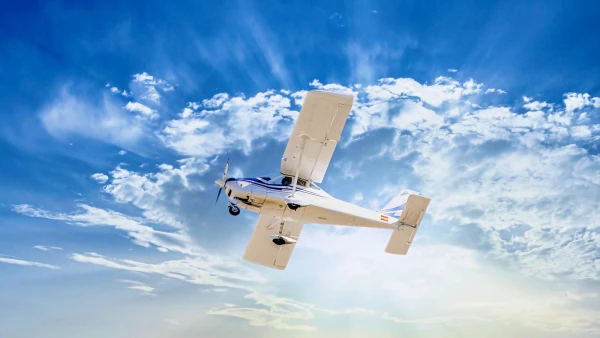
In the United States, the dream of taking to the skies doesn’t always require a pilot’s license, a medical exam, or even aircraft registration—if you’re flying an ultralight. The Federal Aviation Administration (FAA) has carved out a narrow but long-standing exception under Part 103 of its regulations, allowing certain recreational flyers to operate lightweight aircraft without the usual bureaucratic hurdles. But this freedom comes with strict limits designed to keep the skies safe.
The FAA’s Hidden Exemption: No License, No Problem
The FAA’s Part 103 regulations were introduced decades ago to encourage recreational flying while minimizing risk. Unlike traditional aircraft, ultralights—defined by their weight, speed, and single-occupant capacity—are exempt from most certification and licensing requirements. The catch? The aircraft must meet precise performance standards, and pilots must adhere to strict operational rules.
"Part 103 isn’t about deregulation," explains aviation journalist Ethan, who holds a Commercial Multi-Engine Pilot certificate and works in aircraft component repair. "It’s about controlling risk through aircraft design rather than pilot training. The FAA’s approach ensures that these vehicles remain simple, slow, and lightweight—far from the capabilities of certified airplanes."
What Counts as an Ultralight?
To qualify under Part 103, an aircraft must meet several key criteria:
- Weight: Powered ultralights must weigh 254 pounds or less (empty). Unpowered ultralights, like hang gliders, are capped at 155 pounds.
- Occupancy: Only one person is allowed on board.
- Fuel Capacity: Limited to 5 gallons for powered ultralights.
- Speed: Maximum 55 knots (63 mph) in level flight.
- Altitude: Restricted to 10,000 feet or below.
These limits ensure that ultralights can’t evolve into conventional aircraft that would require full certification. "The FAA’s goal isn’t to make flying easier—it’s to make it simpler," Ethan notes. "The trade-off is that ultralights sacrifice range, speed, and capability for accessibility."
Where and When Can You Fly?
Even with these relaxed rules, ultralight pilots aren’t free to roam the skies at will. The FAA imposes additional restrictions:
- Daylight only: Flights must occur between sunrise and sunset.
- No congested areas: Operations are banned over cities, towns, or large gatherings of people.
- Controlled airspace off-limits: Flying in Class A, B, C, D, or E airspace requires prior authorization from air traffic control.
- No commercial use: Ultralights are strictly for recreational or sport purposes.
"The FAA’s rules aren’t optional—they’re designed to prevent ultralights from becoming a hazard," says Ethan. "Just because you don’t need a license doesn’t mean you can ignore airspace rules or weather conditions."
The Cost of Freedom: Cheap Entry, Limited Capabilities
One of the biggest draws of Part 103 is its affordability. Without the need for a pilot’s license, medical certification, or aircraft registration, the financial barrier to entry is dramatically lower than for traditional aviation. Training costs, while not required by the FAA, are often pursued voluntarily through organizations like the Experimental Aircraft Association (EAA).
The cheapest new ultralight on the market in 2026 is the Mini-Max 1103R, a single-seat kit aircraft priced at $10,899.99 for the airframe alone. A ready-to-fly version costs around $22,500—a fraction of the price of a certified aircraft like a Cessna 172.
Yet, the trade-offs are significant. Ultralights are slow, have limited range, and lack the power of certified planes. "You’re not going to fly cross-country in an ultralight," Ethan says. "These are for short, local flights—purely for the joy of flying."
Is Part 103 Safe?
The FAA’s approach to ultralights prioritizes safety through design over pilot training. By restricting weight, speed, and fuel capacity, the agency ensures that even inexperienced flyers can’t push the aircraft beyond its limits. However, the lack of formal training requirements means pilots must take personal responsibility for their safety.
"Regulatory exemptions don’t eliminate risk," Ethan warns. "Weather, airspace, and mechanical failures are still real dangers. That’s why many ultralight enthusiasts seek out training programs, even if they’re not legally required."
For those willing to accept the compromises, Part 103 offers a rare opportunity to fly legally without the usual red tape. But as with any form of aviation, the key to safety lies in preparation, respect for the rules, and a healthy dose of humility.
"Part 103 isn’t a shortcut—it’s a different path. One that rewards simplicity but demands caution." — Aviation journalist Ethan