Have you ever wondered why flight attendants buckle into seats that face the back of the plane during takeoff and landing? While passengers are strapped into forward-facing seats, cabin crew often sit with their backs to the tail—an arrangement designed for one reason: survival.
A Seat Built for Impact
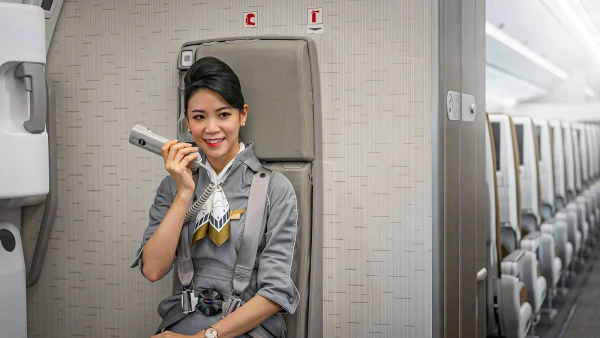
Flight attendants’ jumpseats are engineered to protect them during the most critical phases of flight. During takeoff, landing, or an emergency, sudden deceleration can send the body lurching forward. A rear-facing seat absorbs the force across the back, shoulders, and head, distributing the impact more evenly than a forward-facing seat with a simple lap and shoulder harness. This reduces the risk of spinal or neck injuries, keeping crew members conscious and mobile—essential for guiding passengers to safety in an evacuation.
"The jumpseat isn’t just a place to sit; it’s a piece of safety equipment," explains a veteran cabin crew member with over two decades of experience. "In an emergency, we need to be uninjured and alert to direct an evacuation. That’s why these seats are positioned near exits and designed to protect us when it matters most."
More Than Just a Seat
Flight attendants’ jumpseats are packed with safety features. Each one includes a four-point harness that secures the torso and pelvis, a life vest and torch stored beneath the seat, and an interphone for communication with the flight deck. Some models even have smoke hoods, fire gloves, and extinguishers mounted nearby. Before every flight, crew members perform a meticulous check to ensure the harness is functional and the emergency equipment is accessible.
The seats are strategically placed throughout the cabin—often near galleys or emergency exits—to give attendants a clear view of passengers. This positioning allows them to monitor for unruly behavior, spot passengers in distress, and prepare for potential evacuations. On some aircraft, like the Airbus A320, a crew member in the aft galley may even face forward to observe the rear cabin, ensuring no area is left unchecked.
Why Passengers Don’t Get the Same Protection
While rear-facing seats offer superior impact protection, airlines rarely install them for passengers. The reasons are practical: rear-facing seats are heavier, increasing fuel consumption, and many travelers find them unsettling. The psychological discomfort of facing backward—combined with concerns about motion sickness and evacuation confusion—makes forward-facing seats the standard.
There’s also a cultural factor. Passengers often prefer the familiarity of forward-facing seats, and airlines prioritize comfort and marketability over safety enhancements for non-crew members. That said, some business-class configurations do offer rear-facing seats, giving passengers a taste of the protection flight attendants rely on every flight.
A Lesson in Aviation Safety
Next time you buckle into your seat for takeoff or landing, spare a thought for the flight attendants strapped into their jumpseats. Their backward-facing perch isn’t just a quirk of airline design—it’s a deliberate choice to keep them safe, so they can keep you safe in return.