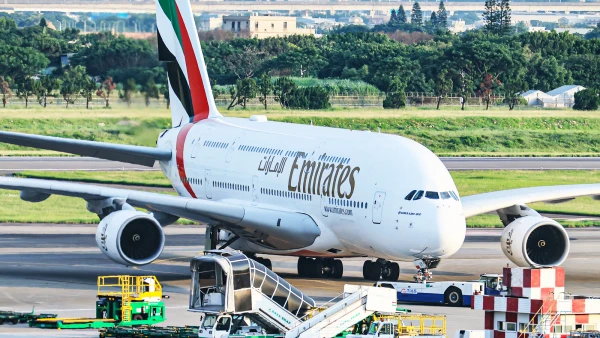
How Emirates Turned the Fuel-Hungry Airbus A380 Into Its Most Profitable Jet
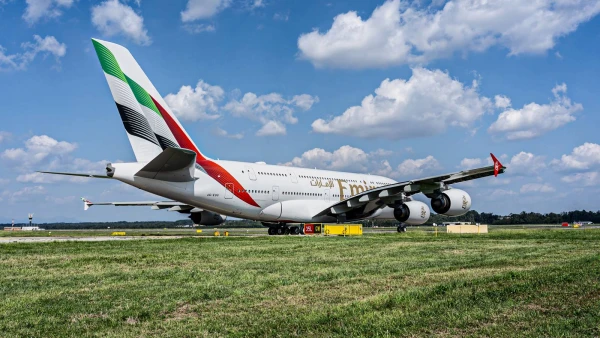
The Federal Aviation Administration’s latest order to ground and overhaul engines on dozens of Airbus A380s has reignited the debate over the superjumbo’s economic viability. But for Dubai’s Emirates Airline, the world’s largest operator of the double-decker jet, the four-engine giant remains an unmatched moneymaker—despite its voracious appetite for fuel and sky-high maintenance costs.
In October, the FAA issued an emergency directive requiring the replacement of high-pressure turbine seals on all Engine Alliance GP7200 turbofans, which power many of the A380s still in service. The move came after an uncontained engine failure forced an Emirates flight to abort takeoff, costing the airline up to $528,150 per engine to repair. The incident underscored the financial strain of operating a quadjet in an era where twin-engine aircraft dominate long-haul routes.
Yet Emirates has bucked the trend. In its most recent financial year, the airline reported a record $6.2 billion pretax profit and made a bold bet by purchasing 29 leased A380s outright, ensuring the superjumbos remain in service until at least the 2040s. The carrier’s leadership has repeatedly defended the A380 as its most profitable asset, citing its ability to transport nearly twice as many high-fare passengers as a Boeing 787-9 on slot-restricted routes like London Heathrow and New York-JFK.
"The A380 was a misfit for Air France. They never scaled; they only have ten aircraft. Yes, we faced the same teething problems, but we dealt with them because we were scaled enough to do it. If you’ve got a subfleet of 10, it’s a bloody nightmare, and the costs go through the roof." — Tim Clark, Emirates President, 2019
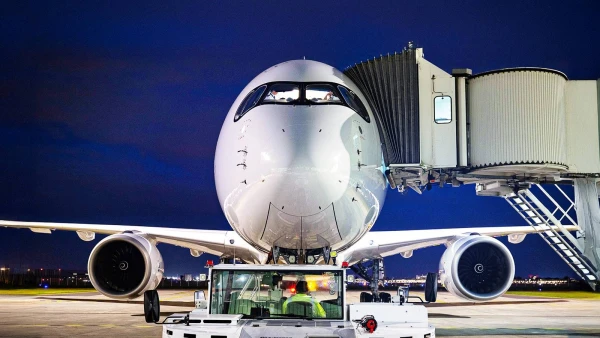
The economics of the A380 are brutal. A twinjet like the Airbus A350-1000 consumes about 1,823 gallons (6,900 liters) of jet fuel per hour, while the A380’s four Rolls-Royce Trent 900 or GP7200 engines guzzle roughly 4,600 gallons (17,413 liters). Yet Emirates has turned this disadvantage into a competitive edge. By packing up to 600 passengers into slot-capped airports where additional flights are impossible, the superjumbo’s sheer capacity offsets its fuel inefficiency.
The airline’s strategy hinges on scale. Running over 100 A380s allows Emirates to spread fixed costs like tooling and spare engines across a vast fleet, reducing the per-aircraft burden. Still, the quadjet’s Achilles’ heel remains its maintenance. By October, 24 of Emirates’ superjumbos were grounded for engine overhauls, while seven more were in storage—highlighting the logistical nightmare of sourcing parts and repairs for an aging fleet.
Emirates’ relationship with the A380 has been a rollercoaster. The airline initially powered its first 90 jets with GP7200 engines before making a stunning $9.2 billion switch to Rolls-Royce Trent 900s for its final 50 aircraft in 2015. The move was driven by concerns over fan blade wear in Dubai’s fine desert sand, which delayed deliveries and sparked years of disputes. The fallout forced Emirates to slash 39 superjumbo orders in 2019, leaving Airbus with insufficient backlog to justify continuing production.
Airbus ultimately shut down the A380 assembly line in Toulouse, with former CEO Tom Enders admitting the program was unsustainable. "If you have a product that nobody wants anymore, or you can only sell below production cost, you have to stop it, as painful as it is," Enders told NPR in 2019. Yet Tim Clark has never given up on the superjumbo. He has repeatedly lobbied for an A380neo, arguing that next-generation engines and composite wings could slash hourly fuel burn by 25%—from 26,455 pounds (12 metric tons) to 19,842 pounds (9 metric tons).
Airbus has yet to commit, demanding orders for at least 250 aircraft before reconsidering. Clark has countered with a minimum purchase of 100 jets, insisting that Emirates would buy them if Airbus incorporated A350 or 787 technology into a modernized A380. "I’m telling you, we would purchase them if you cross-fertilized A350 or 787 technology into a new A380," Clark said in 2026. "It would result in a 25% reduction in operating expenses."
For most airlines, the A380’s era is over. Twinjets like the Airbus A350-1000 and Boeing 777-300ER now dominate long-haul routes, offering 25% to 30% better fuel efficiency per seat. Quadjets, once the backbone of transoceanic travel, have been rendered obsolete by modern reliability standards. But in Dubai, the superjumbo still rules the skies—proof that in the right hands, even the most fuel-hungry aircraft can become a financial powerhouse.