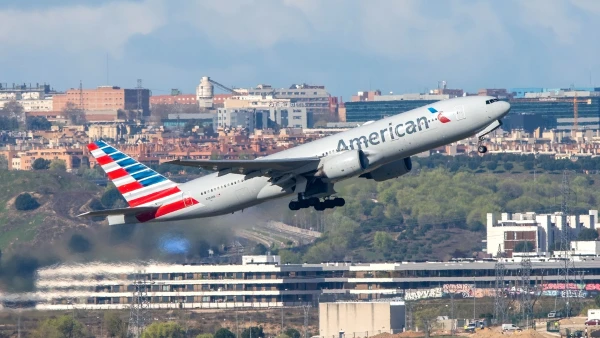
For decades, airlines relied on four-engine behemoths like the Boeing 747 and Airbus A340 to conquer the skies over oceans and remote regions. But a quiet revolution in aviation regulations—and the rise of the Boeing 777—changed everything. By unlocking Extended-range Twin-engine Operational Performance Standards (ETOPS) approvals, regulators gave twin-engine jets the green light to fly routes once reserved for quad-engine giants. The result? A seismic shift in long-haul aviation that slashed costs, boosted efficiency, and redefined global air travel.
"The Boeing 777 proved that two highly reliable engines could provide the range, performance, and operational flexibility once associated with four-engine aircraft." — Boeing, 2011
The Birth of ETOPS: Breaking the Four-Engine Barrier
For generations, the aviation industry operated under a simple rule: the farther a plane flew from land, the more engines it needed. Four-engine jets like the Boeing 707, 747, and Airbus A340 ruled the skies over oceans, offering redundancy and peace of mind. But this came at a steep cost—higher fuel consumption, more maintenance, and bloated operating expenses.
The turning point arrived with the introduction of Extended-range Twin-engine Operational Performance Standards (ETOPS). These regulations, first introduced in the 1980s, gradually relaxed the restrictions on twin-engine jets, allowing them to fly farther from diversion airports. The breakthrough came in 1995 when the FAA granted the Boeing 777 its first 180-minute ETOPS approval—just months before the aircraft entered service with United Airlines. For the first time, a twin-engine jet could safely operate routes once reserved for four-engine giants.
The GE90 Engine: Powering a Revolution
At the heart of this transformation was the GE90, a revolutionary engine developed by GE Aerospace. Designed to deliver unprecedented thrust while meeting the strict reliability standards of extended twin-engine operations, the GE90-115B became the powerhouse behind the Boeing 777’s success. With up to 115,300 pounds of thrust, it was one of the most powerful commercial aircraft engines ever built—and it proved that two engines could do the job of four.
The GE90’s reliability was a game-changer. Unlike earlier twin-engine jets, which were often limited by concerns over engine failure over remote areas, the 777’s GE90 engines demonstrated a failure rate so low that regulators were willing to approve extended diversion times. This reliability, combined with the 777’s high capacity and fuel efficiency, made it an instant hit with airlines. Carriers could now replace fuel-guzzling quad-engine jets with a twin-engine workhorse that offered lower operating costs and greater operational flexibility.
From 180 to 330 Minutes: The ETOPS Evolution
The regulatory journey didn’t stop with the 777’s initial 180-minute ETOPS approval. In 2007, the FAA introduced more comprehensive ETOPS requirements, paving the way for even longer diversion times. By December 2011, Boeing announced that the FAA had granted type-design approval for up to 330-minute ETOPS on qualifying GE-powered 777 variants, including the 777-300ER, 777-200LR, and 777 Freighter.
This approval was a watershed moment. Airlines could now operate more direct routes, cutting flight times and reducing fuel consumption. The 777’s ability to fly for over five hours from the nearest diversion airport opened up new possibilities for nonstop services between distant continents. By 2011, twin-engine 777s had already accumulated more than seven million ETOPS flights since 1985, proving that the technology was not just viable but superior to the four-engine status quo.
The Economic Impact: Why Airlines Dumped Four-Engine Jets
The economic advantages of the Boeing 777 were impossible to ignore. Airlines could replace large four-engine aircraft like the Boeing 747 and Airbus A340 with twin-engine 777s, slashing fuel costs and maintenance expenses. Instead of filling a 747 with hundreds of passengers to make a flight profitable, carriers could operate a 777 with a more flexible capacity and schedule, adapting to fluctuating passenger demand.
The 777 also enabled airlines to introduce new nonstop services that would have been unthinkable with four-engine jets. Routes like Singapore to New York or Dubai to Los Angeles became viable with the 777-300ER, which could fly up to 7,930 nautical miles—far enough to connect distant continents without the need for fuel stops or complex network planning.
Not All Jets Are Created Equal: The Limits of ETOPS
While the 777’s 330-minute ETOPS approval was a landmark achievement, it’s important to note that this figure represents a type-design approval, not a universal operating authorization. Individual airlines must still obtain their own ETOPS approvals, and their permitted routes depend on the specific aircraft-engine combination and regulatory requirements.
For example, an airline operating a GE-powered 777-300ER might be approved for 330-minute ETOPS, while another airline flying the same aircraft with different engines could be limited to a shorter diversion time. This nuance underscores the importance of regulatory compliance and operational readiness—even the most advanced aircraft require careful oversight.
The End of an Era: Four-Engine Jets Fade into History
The rise of the Boeing 777 and ETOPS regulations marked the beginning of the end for four-engine jets in passenger aviation. While quad-engine giants like the Boeing 747 and Airbus A340 still play a role in cargo operations and specialized missions, their dominance on long-haul passenger routes has all but vanished.
The 777’s success proved that airlines no longer needed four engines to connect distant continents. Improved engine reliability, extended diversion approvals, and lower operating costs changed how airlines approached international route planning. Today, twin-engine jets like the Boeing 777, Airbus A350, and Boeing 787 dominate the long-haul market, offering unparalleled efficiency and flexibility.
Yet the legacy of the four-engine era lives on. The Boeing 747, once the queen of the skies, now serves as a cargo workhorse and a symbol of a bygone era. Meanwhile, the 777 and its successors continue to push the boundaries of what’s possible in long-haul aviation—all thanks to a regulatory revolution that gave twin-engine jets the freedom to soar.