An upcoming review is expected to blame HS2's failures on an excessive focus on high-speed performance and political interference, according to sources familiar with the matter.
The report, authored by former National Security Adviser Sir Stephen Lovegrove, will analyze the project's shortcomings and their implications for the civil service and public sector. It is anticipated to echo earlier findings that HS2's "original sins" included shifting political priorities and spiraling costs.
The review is also likely to criticize the "gold-plating" of the high-speed concept, which led to a "bespoke and highly engineered design" that drove up expenses.
Transport Secretary Heidi Alexander is expected to announce in the coming days that trains will not begin running by the current target of 2033 and will provide an updated cost estimate, widely expected to exceed £100 billion.
Originally approved in 2012, HS2 aimed to boost rail capacity from London to Birmingham, with branches to Leeds and Manchester. However, the eastern leg to Leeds was canceled in 2021, and the Manchester-Birmingham section was scrapped in 2023.
In June 2025, Alexander declared a "line in the sand" after what she called a "litany of failure." She tasked HS2 Ltd CEO Mark Wild with a comprehensive "reset" of the project.
Earlier this year, Alexander ordered HS2 bosses to consider reducing top speeds as a cost-saving measure. The line was designed for trains running up to 360 km/h (224 mph), faster than any other conventional railway globally. Most UK high-speed trains operate at about 220 km/h, while HS1—the Channel Tunnel Rail Link—reaches 300 km/h.
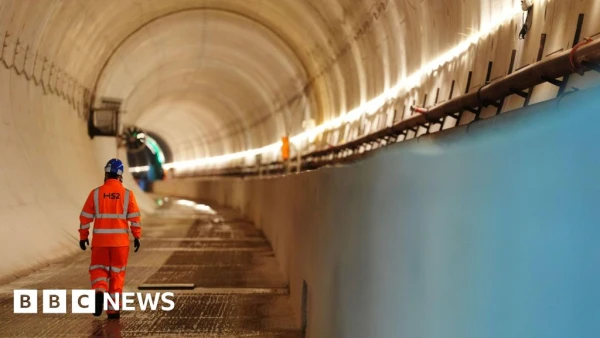
Despite years before its opening, HS2 is in peak construction. Key structures like the 10-mile Chilterns tunnel and the Colne Valley viaduct are finished. To regain momentum, HS2 Ltd has paused or slowed some work, such as the line toward Handsacre, to concentrate resources on lagging sections in Buckinghamshire, Oxfordshire, and Northamptonshire.