JetBlue Airways has quietly reshaped the economics of domestic air travel with a bold gamble: raising checked bag fees while simultaneously rolling out a first-class fare that includes luggage—creating an unexpected value proposition for passengers willing to pay a little more upfront.
Starting November 3, JetBlue’s new pricing structure slaps economy travelers with fees between $50 and $70 for a single checked bag, and $70 to $85 for a second. Those numbers tower over the flat-rate fees charged by legacy carriers like Delta and United, where checked bags typically cost $30 to $40. But JetBlue’s move isn’t just about extracting more cash from passengers—it’s a calculated play to redefine its premium offerings.
The airline’s new BlueFirst fare, introduced alongside its existing Main, EvenMore, and Mint cabins, now includes at least one checked bag in its base price. Even more enticing, the BlueFirst Flex fare bundles two checked bags into the ticket, a rare perk in today’s airline industry. For travelers who typically pay extra for luggage, these fares suddenly look like a bargain.
"JetBlue is flipping the script on how airlines price premium seats," said aviation analyst Daniel Miller. "By bundling bags into BlueFirst, they’re making the total cost of flying more transparent—and for many, cheaper than economy plus fees."
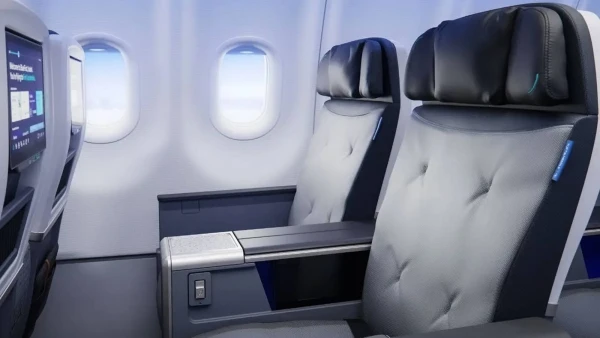
The strategy is particularly sharp in markets like Florida, where JetBlue’s competitive pricing already undercuts legacy carriers. While domestic first-class fares usually command a 40% to 70% premium over economy, JetBlue’s BlueFirst tickets are priced closer to standard economy rates—once you factor in the avoided bag fees. Passengers get more legroom, recliner-style seats, complimentary meals, and premium drinks, all for a total cost that can rival or even beat economy fares with add-ons.
But the move isn’t without risks. JetBlue’s history of operational reliability issues—from frequent delays to cancellations—has eroded trust among travelers. The airline’s JetForward turnaround plan aims to address these problems by cutting unprofitable routes and refocusing on leisure travelers. Yet, until reliability improves, passengers may hesitate to book premium seats, no matter the price.
"BlueFirst is a step in the right direction, but JetBlue still needs to prove it can deliver on its promises," Miller noted. "If they can’t improve reliability, even the best pricing won’t save them."
The airline’s gamble extends beyond pricing. JetBlue has long struggled to command premium fares despite offering a superior economy experience. By introducing BlueFirst, it’s finally tapping into the lucrative demand for first-class seats—a market dominated by legacy carriers like Delta and United. Competitors like Frontier and Allegiant are also eyeing first-class cabins, set to debut in 2027, but JetBlue’s early entry gives it a head start.
For now, BlueFirst fares are primarily available on JetBlue’s busiest routes, including New York, Boston, Florida, and San Juan. The airline’s limited route network outside the East Coast remains a hurdle, as travelers seeking cross-country flights still gravitate toward carriers with broader reach.
Yet, for passengers who value comfort and simplicity over sheer price, JetBlue’s new fare structure could be a game-changer. In an era where airlines nickel-and-dime travelers with hidden fees, JetBlue’s BlueFirst fares offer a rare blend of transparency and value—if passengers are willing to take the risk on an airline still proving its reliability.