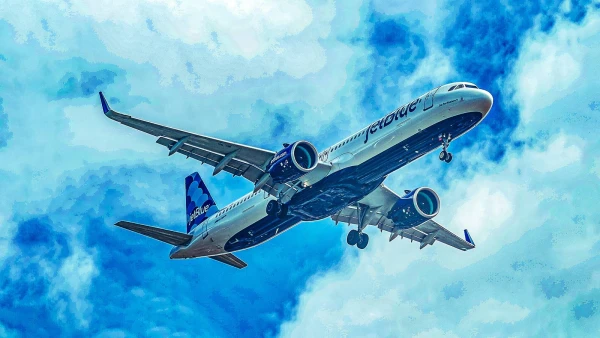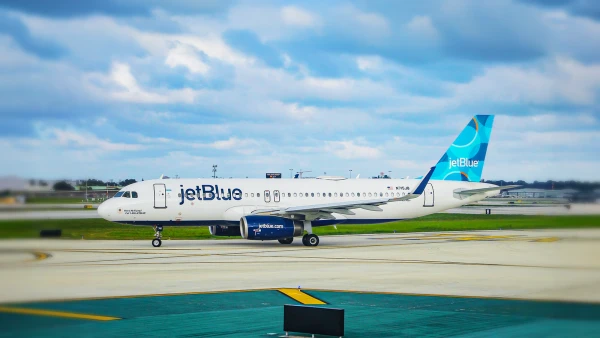
JetBlue’s Airbus A320 fleet in 2026 is flying high—literally—over Florida. New flight data reveals the airline’s busiest route isn’t a bustling business corridor but a sun-soaked leisure link between Orlando and San Juan, Puerto Rico, with nearly 3,600 flights annually. The revelation underscores JetBlue’s strategic pivot toward Florida, a move analysts suggest could be both opportunistic and deliberate as the airline reshapes its network amid financial challenges.
According to aviation analytics firm Cirium, the Orlando–San Juan route led all JetBlue A320 operations in 2026, clocking 3,562 round-trip flights and offering over 572,000 seats. The connection, spanning 1,189 miles, generated 681.3 million available seat miles (ASMs)—a metric that combines distance and capacity—highlighting its critical role in the airline’s Florida-heavy strategy. But Orlando isn’t alone. All 11 of JetBlue’s busiest A320 routes touch the Sunshine State, with Fort Lauderdale and New York-area airports forming the backbone of this leisure-driven network.
“The data shows JetBlue isn’t just flying to Florida—it’s betting big on it,” said an industry analyst. “Orlando and Fort Lauderdale are now the airline’s growth engines, replacing traditional hubs like JFK with high-frequency, high-demand routes.”
Orlando’s Leisure Boom Fuels JetBlue’s Strategy
Orlando International Airport (MCO) has become the beating heart of JetBlue’s Florida operation. The airline operated 1,782 flights from MCO to San Juan’s Luis Muñoz Marín International Airport (SJU) in 2026, offering nearly 287,000 seats in each direction. The route’s balanced demand—with nearly identical traffic in both directions—suggests it’s a year-round favorite, not just a seasonal escape.
The numbers tell a compelling story: Orlando alone accounts for 52% of the 11 busiest A320 routes. But the airline’s Florida reach extends far beyond the theme-park capital. Fort Lauderdale, JetBlue’s historic gateway, has evolved into a dual-purpose hub, serving both New York-area travelers and Caribbean-bound vacationers. Routes like Fort Lauderdale–LaGuardia (3,350 flights) and Fort Lauderdale–San Juan (3,280 flights) are now among the airline’s most frequented, blending business and leisure traffic.
Capacity vs. Frequency: The Florida Equation
While flight counts paint one picture, capacity metrics reveal another. Orlando–San Juan remains the largest route by ASMs, but Fort Lauderdale–LaGuardia isn’t far behind, generating 583.9 million ASMs. This underscores the importance of distance in JetBlue’s financial calculations. A shorter flight like Fort Lauderdale–San Juan (1,046 miles) may have fewer flights than Orlando–JFK, but its higher seat density and proximity to leisure markets make it a key revenue driver.
JetBlue’s third-quarter 2026 results reflect this balancing act. The airline reported an 18.4% increase in revenue per available seat mile (RASM), yet fuel costs surged 57% year-over-year to $3.91 per gallon. Despite a $257 million net loss in Q3, Fort Lauderdale’s RASM rose nearly 15%, outpacing a 65% capacity increase. The airline’s new domestic first-class product, BlueFirst, debuting on Boston–Fort Lauderdale in December 2026, signals an attempt to monetize longer routes with premium offerings.
Fleet Tweaks: More Seats, More Profit?
JetBlue’s Airbus A320s come in two configurations: a classic 150-seat layout and a restyled 162-seat version. Flight data suggests the airline is favoring the higher-capacity model on its busiest Florida routes. For example, Fort Lauderdale–LaGuardia and Fort Lauderdale–San Juan average close to 162 seats per departure, while Orlando–LaGuardia hovers around 159 seats—potentially indicating a mix of both aircraft types.
The 12-seat difference may seem minor, but at scale, it adds up. On Orlando–San Juan alone, switching entirely to the 162-seat configuration could unlock an additional 42,744 seats annually. Yet the strategy carries risks: more seats mean thinner margins unless those seats are filled at profitable fares. With 129 A320s in its fleet as of September 2026, JetBlue’s ability to optimize these aircraft will be critical as it eyes sustained profitability in 2027.
The A220 Wildcard
JetBlue’s fleet transition is far from over. The airline is gradually phasing out older A320s in favor of Airbus A220s, which promise better fuel efficiency and lower operating costs. How this shift will impact Florida’s high-frequency routes remains unclear. The A220’s smaller size could allow for more targeted capacity adjustments, but the A320’s role in JetBlue’s leisure-heavy network ensures it won’t disappear overnight.
For now, Florida’s allure shows no signs of fading. Whether JetBlue’s Florida focus is a calculated gamble or a response to market gaps left by Spirit Airlines’ collapse, one thing is certain: the airline’s A320s are flying the sunshine state like never before.