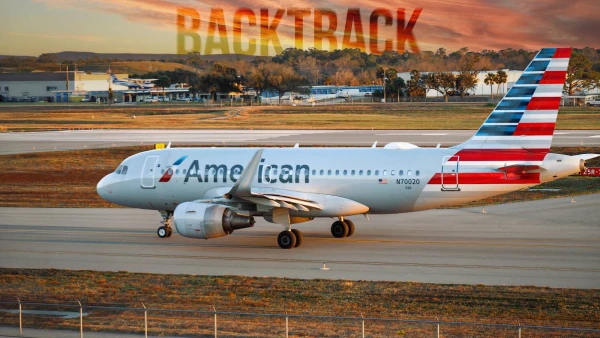
American Airlines is reversing course on a costly cabin upgrade after stripping seatback screens from 23 of its 32 legacy Airbus A319s—only to announce plans to reinstall them. The airline’s abrupt pivot from a bring-your-own-device model to a full fleetwide entertainment overhaul has left a fleet of aircraft in limbo, raising questions about the efficiency of its refurbishment strategy.
"The airline’s decision to restore seatback screens reflects a shift in passenger expectations and the limitations of relying solely on personal devices." — Aviation industry analyst
A Costly Detour in Cabin Modernization
The airline’s recent refurbishments of its Airbus A319s were designed to align with its push toward a device-centric cabin. Crews removed seatback screens and replaced them with device holders, part of a broader effort to streamline operations and reduce hardware maintenance. But the strategy hit turbulence when American announced a sweeping return to seatback entertainment in August 2026, committing to install displays across its entire narrowbody fleet.
The timing of the reversal has left the airline in a bind. By June 2026, 23 of the 32 legacy A319s had already completed the screen-removal process, with the remaining nine expected to follow by the end of the summer. While American has not confirmed when these aircraft will receive their new screens, the delay raises concerns about wasted effort and resources.
The New Seatback Experience: More Than Just a Screen
The reinstated entertainment system promises to be a significant upgrade from previous iterations. American has confirmed that the new displays will feature 4K resolution, Bluetooth audio connectivity, USB-C fast charging, and personalized content recommendations. Passengers will also benefit from enhanced flight maps with real-time updates and destination information.
"The new system is designed to bridge the gap between built-in entertainment and personal devices, offering passengers flexibility without sacrificing convenience." — American Airlines spokesperson
The airline has not disclosed the exact dimensions of the screens or the hardware supplier, but it claims they will be among the largest available on narrowbody aircraft in North America. The upgrades are part of a broader fleet modernization plan that includes satellite internet installations, further complicating the timeline for aircraft retrofits.
A Fleetwide Overhaul with Unanswered Questions
While American’s decision to restore seatback screens applies to its entire narrowbody fleet, the airline has not provided a clear schedule for when each aircraft type will receive the upgrades. New narrowbody deliveries starting in 2028 will include the new entertainment systems, but the retrofits for existing aircraft are expected to stretch into the early 2030s.
The uncertainty leaves passengers and industry observers wondering how the airline will manage the transition. Will the legacy A319s be prioritized for upgrades, or will they wait in line behind newer aircraft? And with at least 40 aircraft slated for retirement by the end of 2027, the cost of retrofitting older planes may soon outweigh the benefits.
For now, American Airlines is navigating a delicate balance between passenger expectations, operational efficiency, and the financial realities of fleet modernization.